“How To” Series: Using GPS in Photography

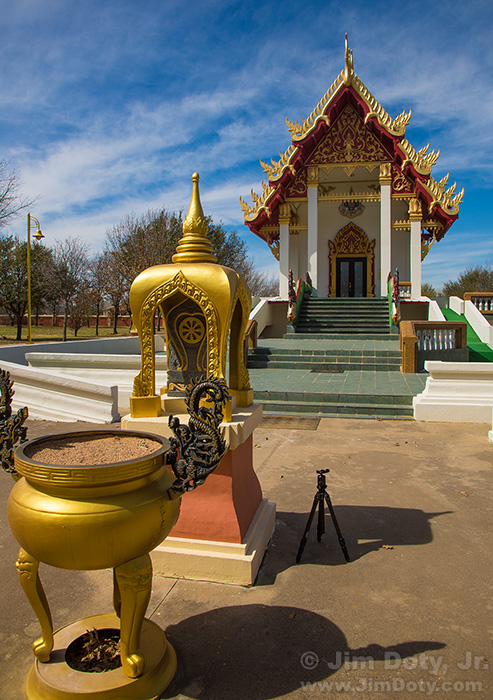
Temple Image with GPS coordinates. Click for a larger version.

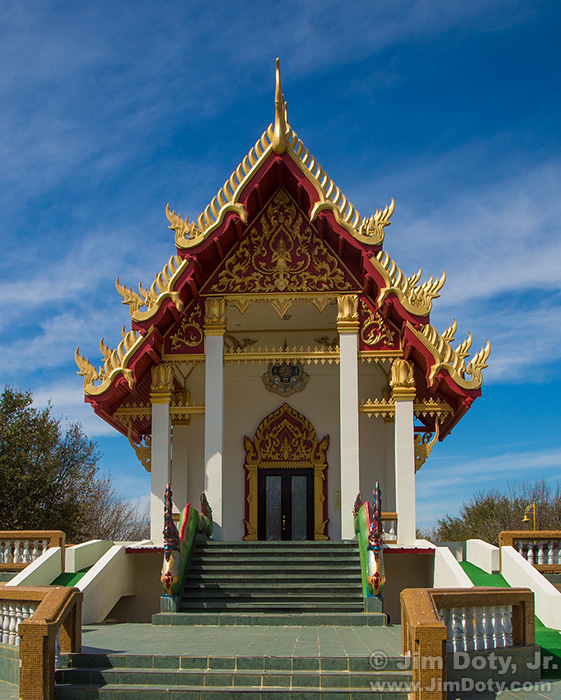
Temple Image with GPS coordinates. Click for a larger version.

The GPS system is increasingly important to photography. It will help you figure out where you took some of your more obscure photos and help you caption your photos. More and more photo editors want GPS information for the photos they publish. A GPS communicator could save your life. This series will help you learn the ins and outs of GPS, plus keep you and your family safe.

Originally posted Jan. 29, 2016. Updated and re-posted Feb. 11, 2017. Updated November 19, 2025.

Continue reading

Geotagged Photos: Posting Photos Online Can Put Your Family at Risk

Exif Viewer, GPS Location Data

Exif Viewer, GPS Photo Location Data

Your smartphone is designed to geotag the locations of your photos and store it in the photo’s “metadata”. Many other cameras do the same thing. This means if you take pictures of your family and post them online, anyone (including some very unsavory characters) can pull up a map of where the photo was taken. Is there really a danger? Yes. Are you at high risk for this happening to you? That is hard to say. Is it better to be safe than sorry? Of course.  What can you do to protect your family? Keep reading.

Originally posted August 13, 2013. Revised and updated and re-posted Feb. 11, 2017.

Continue reading

Satellite Communicators: The GPS Messaging Devices That Can Save Your Life

DeLorme inReach Two Way Satellite Communicator

The original DeLorme inReach Two Way Satellite Communicator

You need help. You can barely move. You are far enough from the trail that no one can hear your voice. You have no cell phone signal. What do you do?

Every now and then you hear tragic stories about people who lose their lives simply because they didn’t have a cell phone signal and couldn’t call for help in an unexpected emergency. A $260 – $340 satellite communicator would have saved their lives.

Originally posted Nov. 10, 2014. Updated and re-posted Feb. 11, 2017.

Continue reading

Using Google Earth in 3D Mode to Label Aerial Photos

Sangre de Cristo Mountains and the Great Sand Dunes

Sangre de Cristo Mountains and the Great Sand Dunes

Your friendly magazine photo editor wants to know if you have an aerial photo of Crestone Peak. Or maybe you are just curious about the stuff you photograph out an airplane window. Looking at a map, a topographic map, or a satellite image is the usual way to identify objects in an aerial photo, but sometimes that doesn’t work very well. That’s where Google Earth in 3D “flyover” mode comes in.

Originally posted Feb. 8, 2017. Updated Feb. 11, 2017.

Continue reading

How To Get GPS Coordinates Into Google Earth

El Capitan in the moonlight. Camera and tripod. El Capitan Meadow, Yosemite National Park.

El Capitan in the moonlight along with a camera and tripod. El Capitan Meadow, Yosemite National Park, California.

GPS Data is increasingly important to photographers. It is the link between photos and photographic locations. It can be very helpful to drop GPS coordinates into a program like Google Earth to be able to tell exactly where a photo was taken. How do you do that?

Originally Feb. 9, 2016. Updated and re-posted Feb. 5, 2017.

Continue reading

Using Google Earth to Find the Name of a Mountain (and How to Get GPS Info into Google Earth)

"Mountain in Colorado"

“Mountain in Colorado”

What is the name of this mountain? Photo editors want to know. They like caption information. If you have a distinctive mountain in your photo, “Mountain in Colorado” won’t cut it with your friendly neighborhood photo editor. Here’s how to identify that mountain in Google Earth (and how to get GPS coordinates into Google Earth).

Originally posted Jan. 26, 2016. Updated and re-posted Feb. 5, 2017.

Continue reading

Checking the GPS Location Accuracy of Your Camera, Part One

Yellow Pin: GPS location provided by the camera. Red X: Actual photo location.

Yellow Pin: GPS coordinates provided by my iPhone. Red X: Actual photo location.

In a prior article (on figuring out the name for Antora Peak) I noted the discrepancy between the GPS coordinates provided by my iPhone and the actual location where I took the photo (graphic above). They were off by about 20-30 feet. You can test the accuracy of the GPS information provided by your camera/smartphone. This article will show you how.

Originally posted Jan. 28, 2016. Updated and re-posted Feb. 3, 2017.

Continue reading

Comparing the GPS Accuracy of Three Cameras

19 MI Road looking west, Michigan's U.P.

Looking west from the intersection of S. Hantz Road and 19 Mile Road. Canon 7D2 and 100-400mm lens.

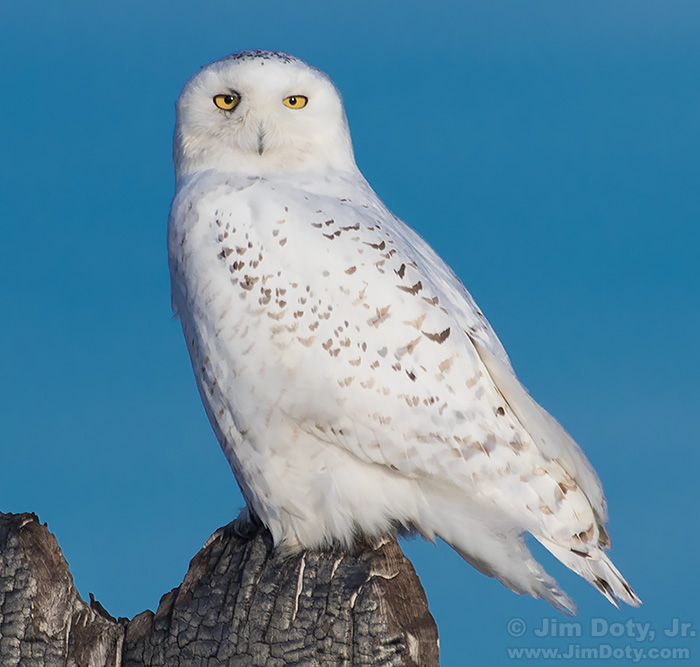
I was on S. Hantz Road east of Rudyard, Michigan looking for Snowy Owls. According to eBird there had been several recent Snowy Owl sightings in the area, but no owl was to be found the day I was there. Another photographer I met didn’t have any luck either. I had three GPS enabled cameras with me, counting my phone, so with no owls in sight I decided to compare the accuracy of the GPS units.

Originally posted Jan. 31, 2017. Revised and expanded Feb. 19, 2017.

Continue reading

“Where Were You When You Took Those Photos?”

Mount Rundle, Two Jack Lake

Mount Rundle, Two Jack Lake

Today (Mar 18, 2014) I was asked by a client where I was when I took some photos in Banff National Park. I was able to provide him with the exact locations, complete with marked satellite images. It is a good idea to known where you were when you created your most important images, and the more specific the information the better. It is good info to have for your own use and sometimes it can make the difference between whether or not one of your images is published.

Originally posted Mar. 18, 2014. Updated and re-posted Jan. 30, 2017.

Continue reading

The National Park Series: Where to Go and When

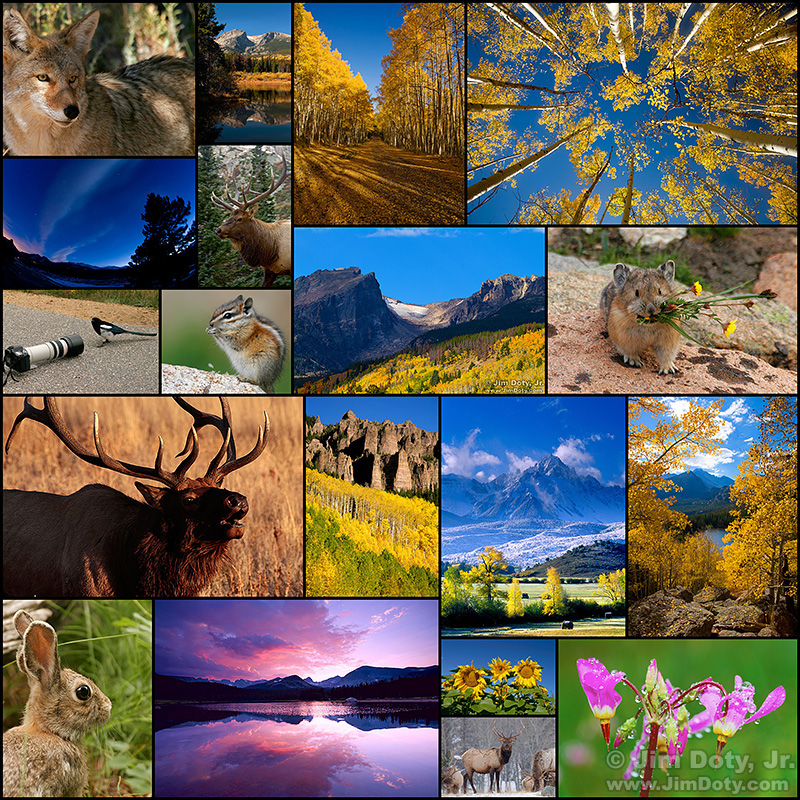
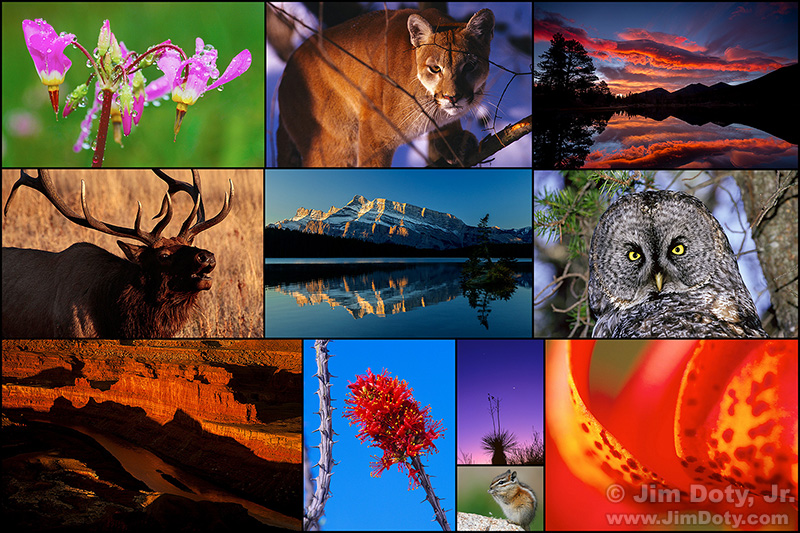
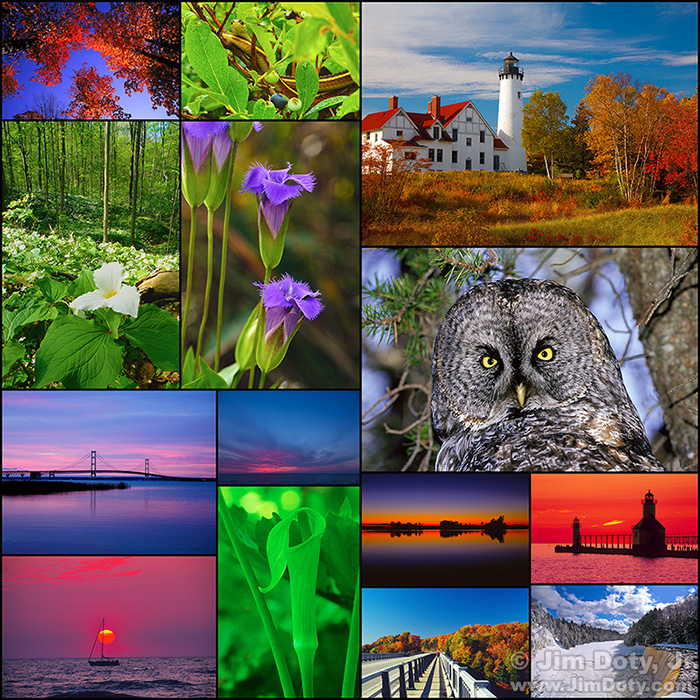
National Parks Collage. Click for a larger version.

The national parks in the U.S. and Canada are natural, environmental, and photographic treasures. They are high on the list of preferred destinations for professional and amateur photographers alike. To help you show up at right places at the best times to create beautiful images, I put together this ongoing series of articles.

Posted January 22, 2017. Most recent update: September 10, 2025. Continue reading

When is the Best Time of Year to Photograph Each of Our National Parks?

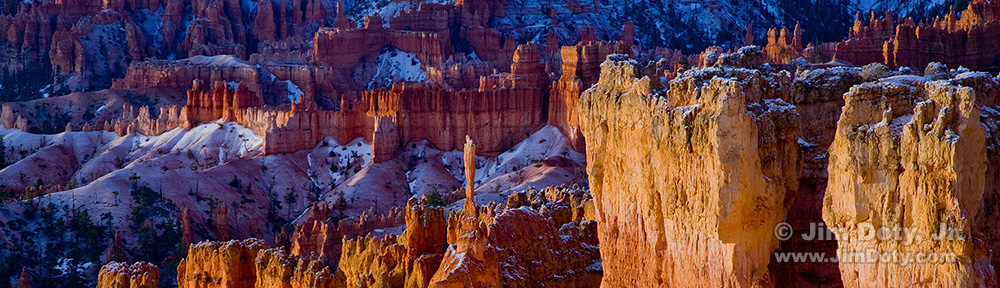
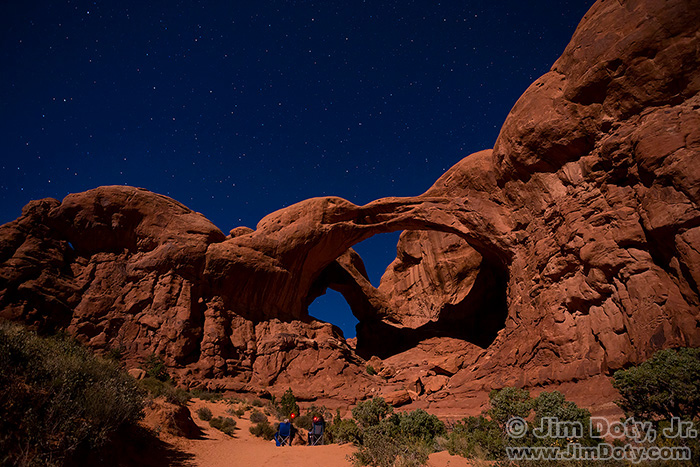
Denali, Arches, Bryce Canyon, and Rocky Mountain National Parks

Denali, Arches, Bryce Canyon, and Rocky Mountain National Parks

Planning a trip to photograph some of our national parks? You will get better images if you visit a national park at its prime season of the year. But when is each park at its very best? And how about great locations that aren’t in the national parks? This article has answers.

Posted January 18, 2017. Updated February 10, 2018.

Continue reading

The Chinese Lens Rip Off! Part Four

We’ve been down this road before. The formula is simple. Take a cheap smart phone telephoto lens you can buy at Amazon for $15, sell it for $54.95, say it is a limited half price offer, and imply the lens will do amazing things that every well informed photographer knows the cheap lens absolutely can’t do.

Posted Jan. 8, 2017. Expanded Dec. 2, 2017.

Continue reading

One Photographer and Nine Outdoor/Travel Writers Pick the Best Winter National Parks

Mount Hunter from a Bush Plane. Denali National Park. Alaska.

Mount Hunter from a Bush Plane. Denali National Park. Alaska.

I am planning a winter photography trip to some U.S. national parks, some of which I haven’t been to before. So I am narrowing down my choices to fit the time I have. My search is what led to the advice in this article. I recommend you also read The Best National Parks to Photograph in Winter.

Posted January 17, 2017. Updated Jan. 3, 2018.

Continue reading

The Best National Parks to Photograph in Winter

Bryce Canyon

Bryce Canyon

Winter provides some wonderful photo opportunities in our national parks. So if you haven’t gone into hibernation for the winter, here are the best national parks to go photograph this winter, grouped by state from the west to the east. There are a few bonus locations thrown in too. At the end I give you my “best of the best” list.

Posted Jan. 17, 2017. Updated Jan. 3, 2018.

Continue reading

Winter Photography Safety Essentials

Some of the winter travel items I carry in the trunk of my car.

Some of the winter travel items I carry in the trunk of my car. This is the kitchen and “furnace”.

I grew up in Colorado where strange weather can strand you in any month of the year. Even though it is rare, I’ve seen blizzards in the high country in July. So I learned to carry some safety essentials when doing winter photography in remote locations. You never know when you might be stranded for several hours, a whole day, or longer, until the blizzard abates and someone can come find you. This is what I carry in my car pretty much year around but especially in the winter. I include a few winter travel tips, too.

Continue reading

Exposure Warning: Turn On The Blinkies

Camera LCD Display With the "Blinkies" Turned On

Camera LCD Display With The Blinkies Turned On. Washed out pixels in the photo are flashing white and black.

Some camera’s come with a highlight overexposure warning, commonly called “the blinkies”. If you have overexposed, blown out pixels, those pixels in your image will flash white and black. A quick look at the LCD image will tell you if part of your image has white, washed out, featureless pixels. If your camera has a highlight overexposure warning, I suggest you turn it on. If you see the blinkies and you don’t want washed out pixels, tone down your exposure until the blinkies go away.

Continue reading

How To Focus Your Lens at Infinity for Night Photography

Photography workshop out at night. Bear Lake, Rocky Mountain National Park.

Photography workshop at night. Bear Lake, Rocky Mountain National Park.

The most important and difficult step in night photography is to focus your lens at infinity. If you have tried to focus on the stars at night you have already learned that it is an impossible task for the autofocus system and just about impossible for you to do manually. You just can’t see clearly enough through the viewfinder in the dark of night to manually focus on the stars. Fortunately, there are some ways to get the job done.

Originally posted Jan. 8, 2017. Revised and expanded Feb. 10, 2017.

Continue reading

How To Work With A Model When The Windchill is 4°

Selina

Selina, Downtown Columbus, Ohio.

You would think a windchill of 4° Fahrenheit (-16°C) would be too cold for a photo shoot, but not with some models. We booked this January shoot weeks in advance so we knew it would be cold, but we had no idea how cold until the day arrived. Here’s the story behind this image and how to work with a model when it is so cold.

Continue reading

Testing Your Camera’s Snow Exposure Latitude

Cascade, Barry, and Coxe Glaciers

Cascade, Barry, and Coxe Glaciers, Prince William Sound, Alaska

The “snow exposure latitude” for every camera is different. You won’t find it in your camera’s manual but it is easy to determine with a do-it-yourself test. Why does it matter? If you don’t know the snow exposure latitude for your camera and how to apply apply it to your images, the color and quality of your winter photos will suffer.

Continue reading

How To Protect Your Camera Gear in the Cold and Snow

Bruce Canyon After An Overnight Snow

Bryce Canyon After An Overnight Snowstorm

Cold and snow can cause a lot of damage to your camera gear. Something as simple as shooting outside and taking your camera inside your house or car can cause hidden damage that won’t show up until days or weeks later. The simple steps in this article could save you hundreds of dollars in repair bills.

Continue reading