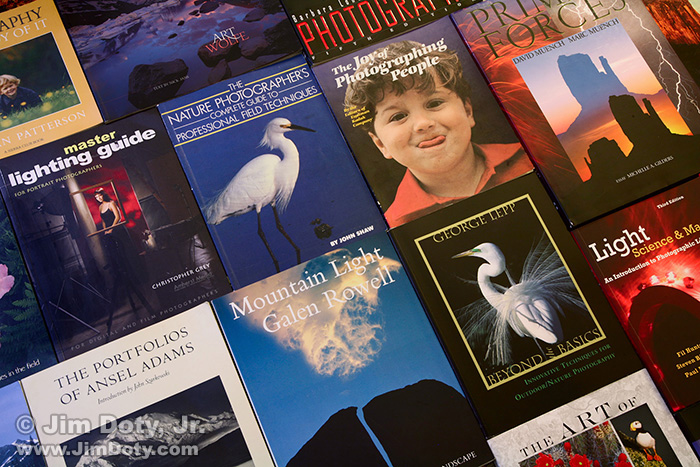
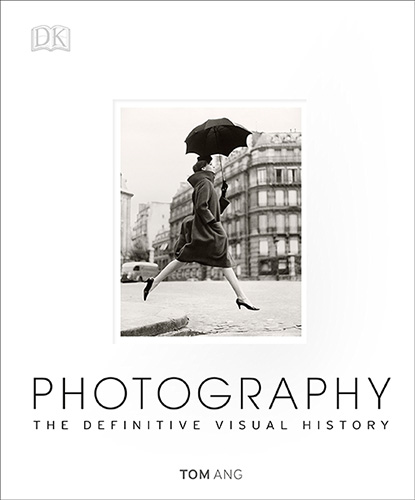
When I picked this book up off the shelf, I couldn’t put it down, at least not until I put it down on the check out desk and bought it. There have been some very fine illustrated history of photography books that have come and gone, but this is far and away my favorite.
Category Archives: General
Best Book on Professional Exposure Techniques
I have no idea how Michael Freeman can be a well traveled, international photographer and still find time to write so many terrific photography books. But somehow he manages to do both. I suspect he never sleeps. I imagine him creating images and writing books 24 hours a day, stopping only to eat once or twice a week!!
Digital Photography Exposure for Dummies Receives Apogee Photo Magazine’s Highest Rating
Michael Fulks, the publisher of Apogee Photo Magazine, wrote at an excellent review of Digital Photography Exposure for Dummies and gave the text an A++, the magazine’s highest rating. The review follows.
Jennifer Blakeley Recommends Digital Photography Exposure for Dummies
Jennifer Blakeley does beautiful newborn photography. Her celebrity client list includes Megan Fox and Brian Austin Green; Vanessa and Donald Trump Jr.; and Jocelyn Towne and Simon Helberg (Big Bang Theory). She is also the founder of Alphabet Photography. A highly respected and award winning Canadian photographer, she has also worked with the Canadian Olympics Gymnastic Team.
Tim Grey Recommends Digital Photography Exposure for Dummies
With 12 books, hundreds of magazine articles, over a dozen instructional videos, and numerous workshops to his credit, digital photography expert Tim Grey really knows his stuff. In one of his eNewsletters, Tim gives this excellent recommendation for Digital Photography Exposure for Dummies:
The Best Book On Photographic Lighting
Many photographers would say Light: Science and Magic is THE best book on photographic lighting – and I agree with them. If you intend to be seriously involved in photography, this book should be on your required reading list.
Some of the Best All Purpose Photography Books
This is a list of books that were the most helpful to me when I took a serious interest in photography, and I continue to refer to them. These books were written back when film was king, but that makes them all the more valuable to today’s digital photographers. Some digital photography books get so lost in technical information that the heart and soul of photography can get lost. The best film photography books are about light and shadow, subjects, form, texture, line and shape – all of which applies to digital photography.
The Best Image Editing Software
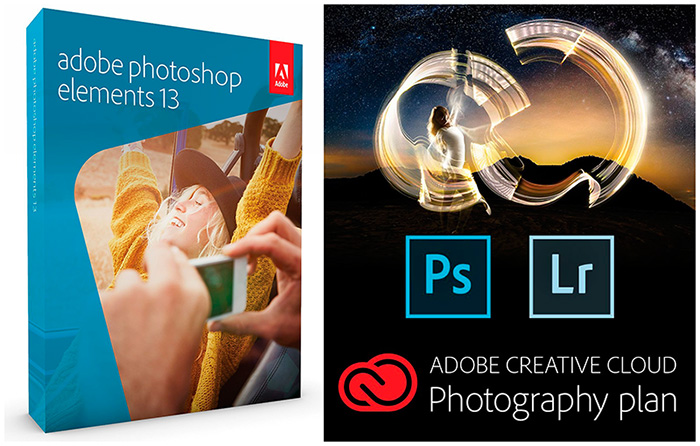
Your photos will look their very best if you optimize them with high quality image editing software. Short list:
Adobe Photoshop Elements 13, 12, or 11*
Adobe Photoshop CC or CS6*
Adobe Photoshop Lightroom CC, 6, 5 or 4*
*The software versions listed above include all the versions that use Adobe’s newest “process version”. See the section below on Adobe’s new process version for more information.
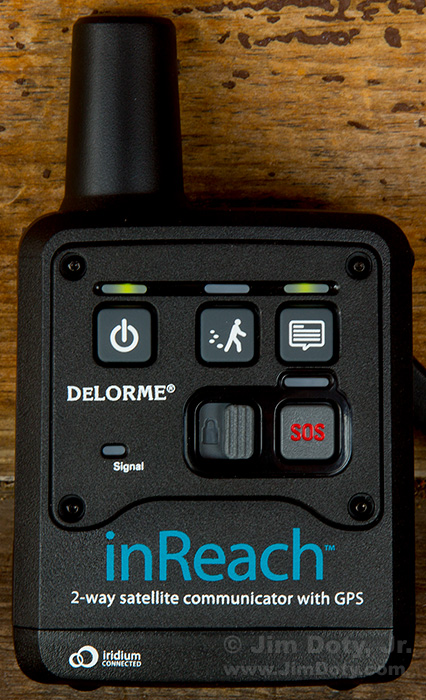
Satellite Communicators: The Messaging Devices That Can Save Your Life
Every now and then you hear tragic stories about people who lose their lives simply because they didn’t have a cell phone signal and couldn’t call for help in an unexpected emergency. A $260 – $340 satellite communicator would have saved their lives.
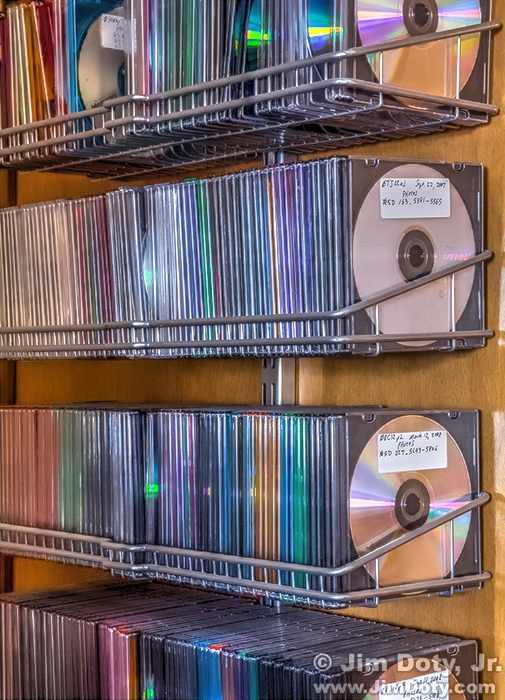
The Best Digital Photo Storage
Don’t lose your digital photos to disc-rot or a hard drive crash. Choose the best archival storage options.
Continue reading
Best Memory Cards For Digital Cameras
The Best Incident Light Meters
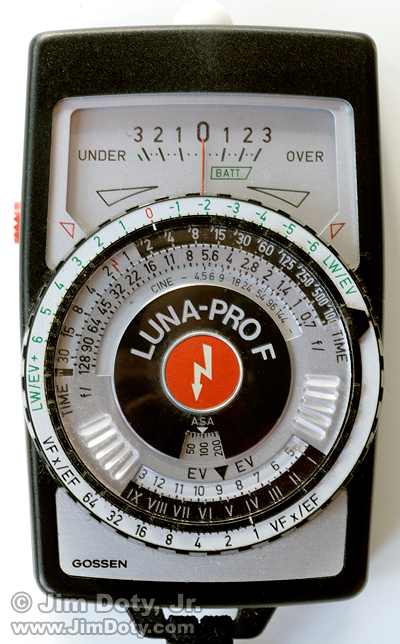
There’s no question that in some complex metering situations, an incident light meter can be quicker, faster, simpler, and more accurate than the meter in your camera. Many incident light meters can also measure light from an electronic flash, a huge bonus when you are using a flash in the manual mode.
Camera Choices: Using Full Size Test Images from DPReview.com
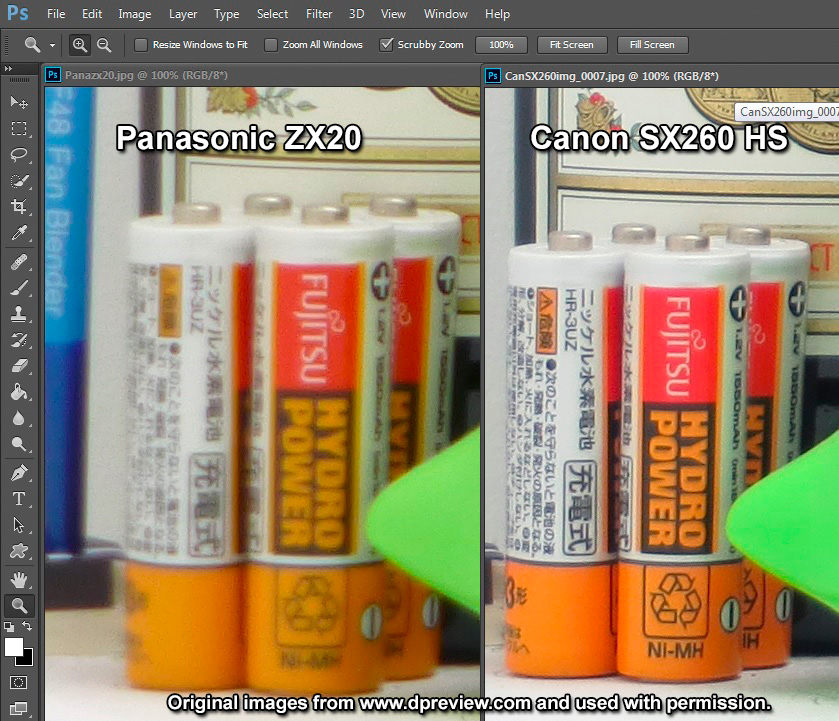
I’ve been recommending DPReview for years in my photography classes, workshops and online. It is one of the best camera review sites. One of the nice features is the ability to download full size JPEG test images of their “standard studio scene” for comparison purposes.
Great Deal? Don’t Get Burned!
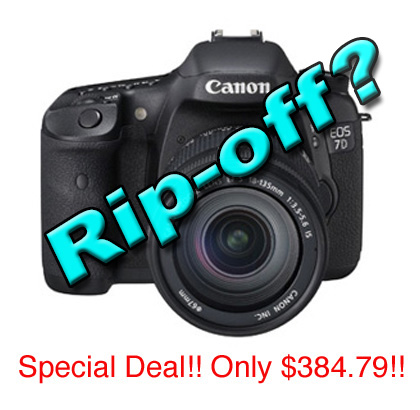
Is it a great deal? Or is it a rip-off? You are searching online for a good price and you come across a terrific deal. Are you about to get burned? There are ways you can tell.
How Long Will Your Photo Lab Prints Last?
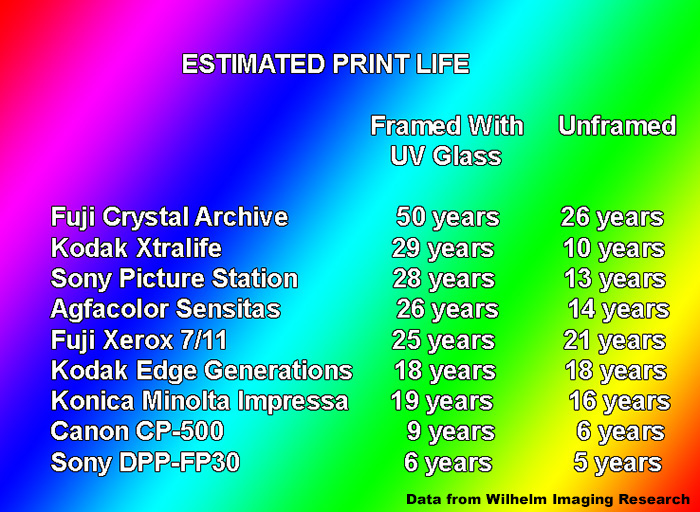
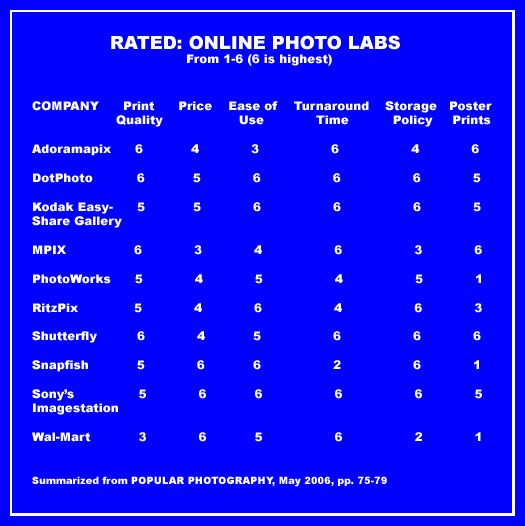
Would you rather pay $3 – $4 for an above average to poor quality 8×10 inch print that will fade in 18 years, 9 years or less, or would you prefer paying $2.00 for a very high quality 8×10 print that will last 50 years? People pay more money for prints with a short life expectancy all the time. Why? Because they don’t have the right information, and they may have no idea that prints have such widely different life spans.
How to Get the Best Results from the Best Online Photo Labs

The lab you choose and the kind of file you send to your lab can make a big difference in the quality of print you get back. How do you pick a good online photo lab? How do you get the best results from your lab? What color space should you use for your digital files and how do you convert your files to the right color space? How big a print can you make from your digital files?
Using the Histogram to Check Studio Flash Exposures
When using studio flash units, usually the best way to check your exposures is to use an incident light meter which is capable of metering flash exposures. But what if you don’t have an incident flash meter? Or what if you have a subject that absorbs a lot of light? Or a subject that reflects a lot more light than your typical photographic subject? You can double check your exposure settings by using the histogram on your camera. FYI: Do not trust the LCD image on the back of your camera to judge your exposures.
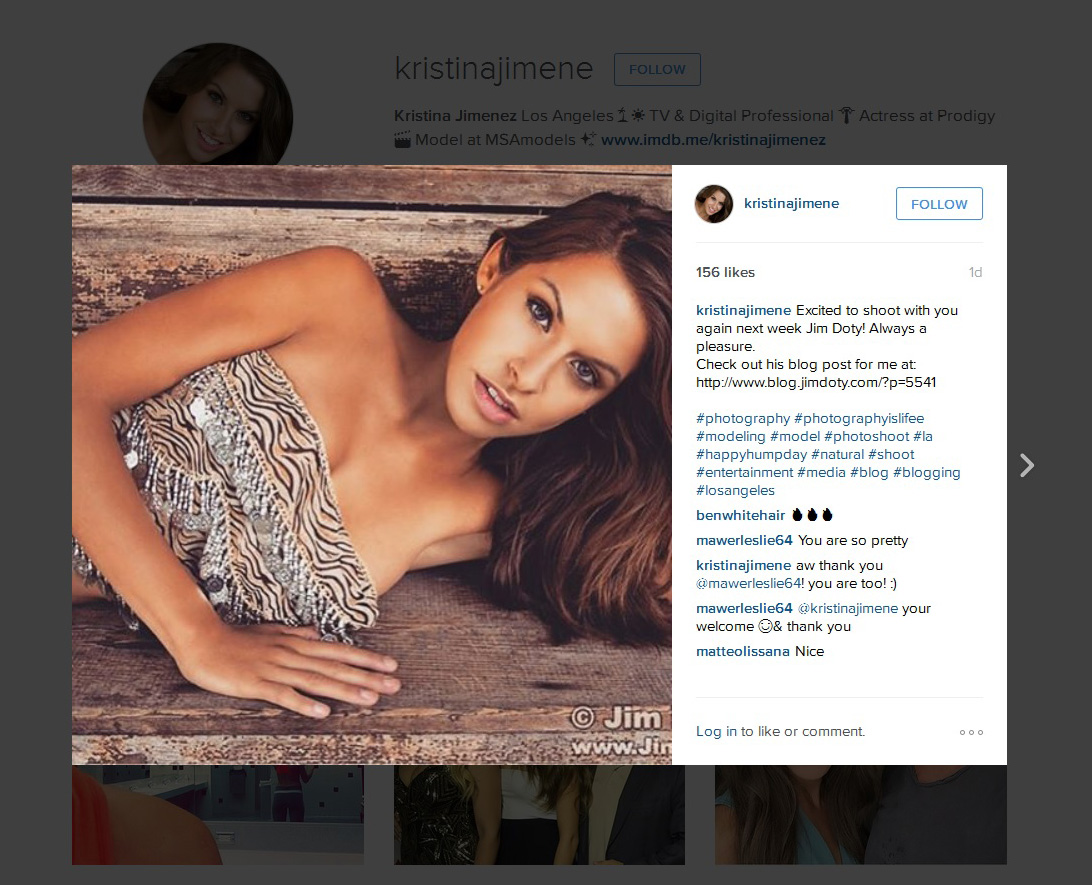
Kristina’s Instagram Post
Kristina Jimenez posted an “Excited to shoot with you again” note on Instagram. It made my day. We have worked on several photo shoots together. She is an absolute delight to work with and a first class professional model. I am excited about working with her again.
In a Photo Rich Environment: Be Prepared

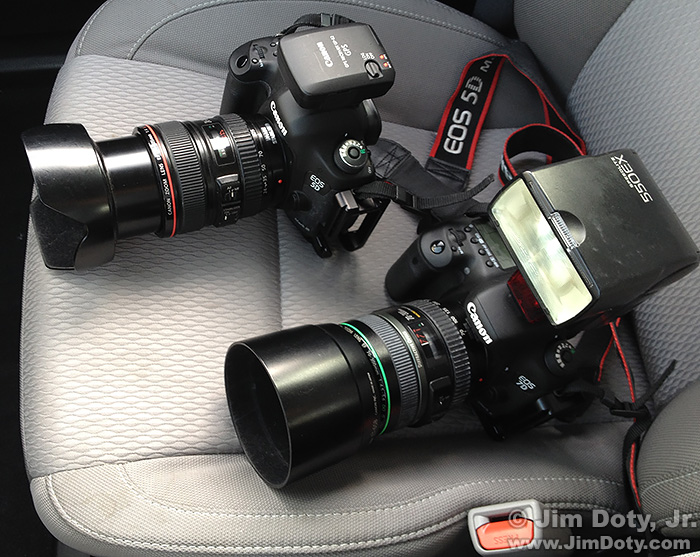
Front seat camera gear. Canon 5D Mark III with Canon EF 24-105mm f/4 lens. Canon 7D Mark II with Canon EF 70-300mm f/4.5-5.6 DO IS lens.
You probably recognize the scout motto: “Be Prepared!” It also applies to photography. When I am in a photo rich environment, especially if there is a possibility of seeing wildlife, I usually have two cameras and lenses on the front seat next to me, all ready to go.
POTD: Stars Trails Over El Capitan

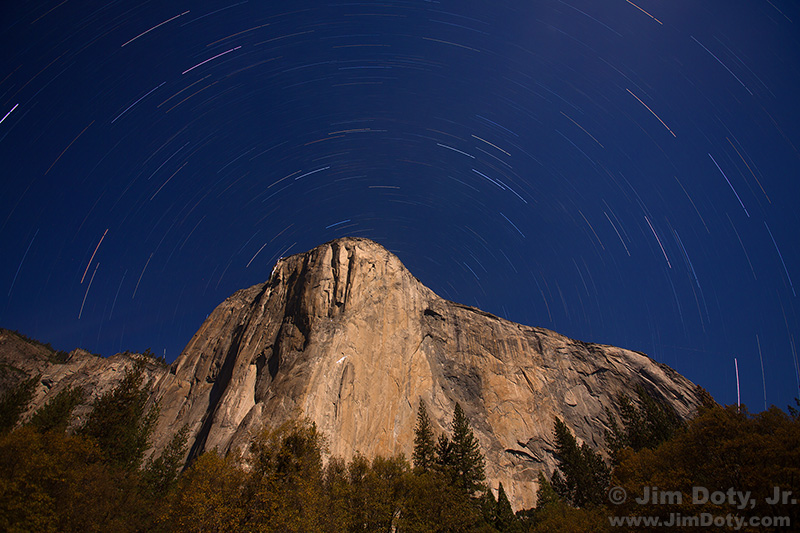
Stars over El Capitan with climbers on the granite cliffs. Yosemite Valley. This is a stacked image combing 8 separate exposures. Click to see a larger version.
El Capitan is a splendid sight in Yosemite Valley. Small wonder that for decades photographers have been showing up in droves to photographic the iconic granite cliffs. It is the largest block of exposed granite on our planet.
How to Create a Stacked Image of the Night Sky

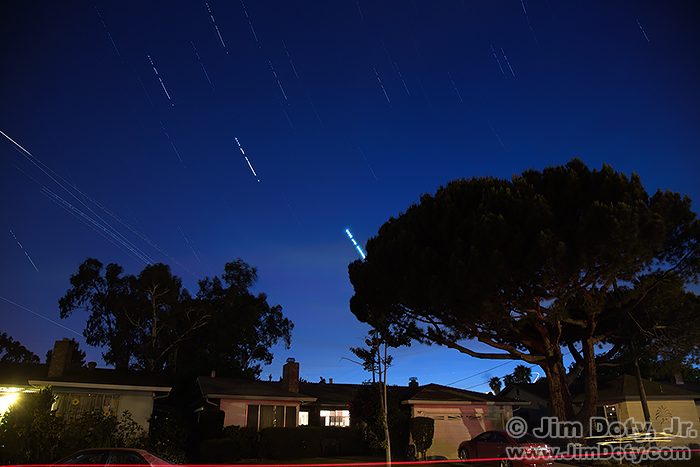
Venus, Jupiter, stars, and airplane lights. Fremont, California. 27 separate images stacked together. Click to see a larger version.
It is a handy thing to know how to stack multiple night sky images into one photo. It allows you to create one stacked image covering a long period of time (using multiple photos) when it is not possible to make one long exposure of the night sky. What is a stacked image? Several images taken over a period of time which are combined to create one image fro the whole time period. This tutorial will show you how to create one.
Preferences Part Two: Shutter Speeds and ISO Settings

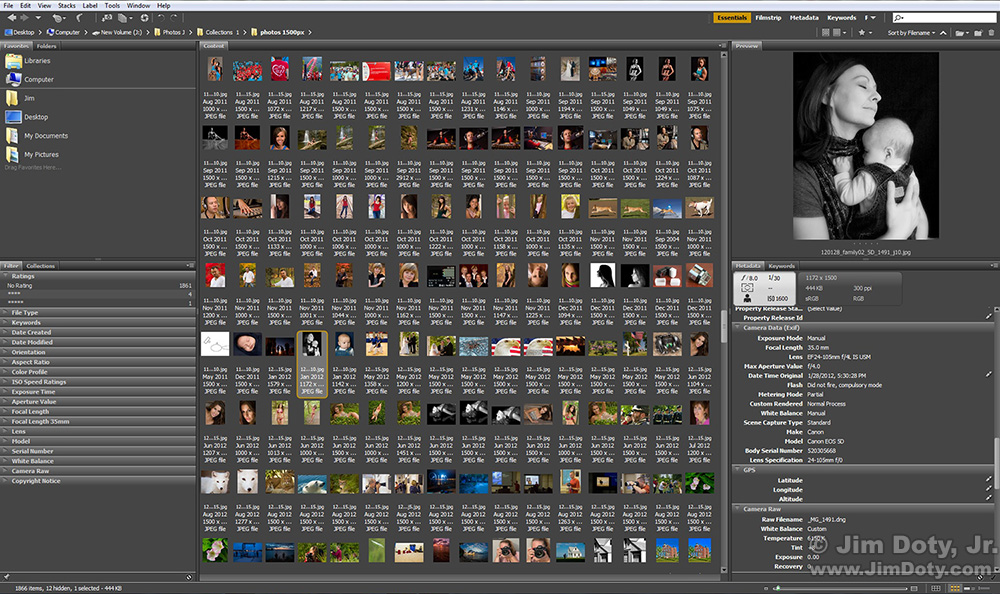
Folder opened with Adobe Bridge. You are looking at 128 images out of over 1800 images in the folder. Click to see a larger version.
I was asked recently if I have a favorite focal length, lens, or aperture setting (see Preferences Part One). And I have also been asked if I have favorite shutter speeds and ISO Settings. So I decided to open a folder with over 1800 of my images (a little of everything) and take a look at my shooting preferences from a statistical point of view. I chose a folder that has a wide variety of subject matter and a high number of images. I used Adobe Bridge for the way it gathers metadata statistics (see the prior article).
Your Camera Loves “Middle Gray” – And Why That is Important
Your camera is in love with middle gray. The quicker you learn how to deal with this infatuation, the better your photos will look, including all of your color photos.
Veterans Day
Preferences Part One: Focal Lengths, Lenses, and Apertures

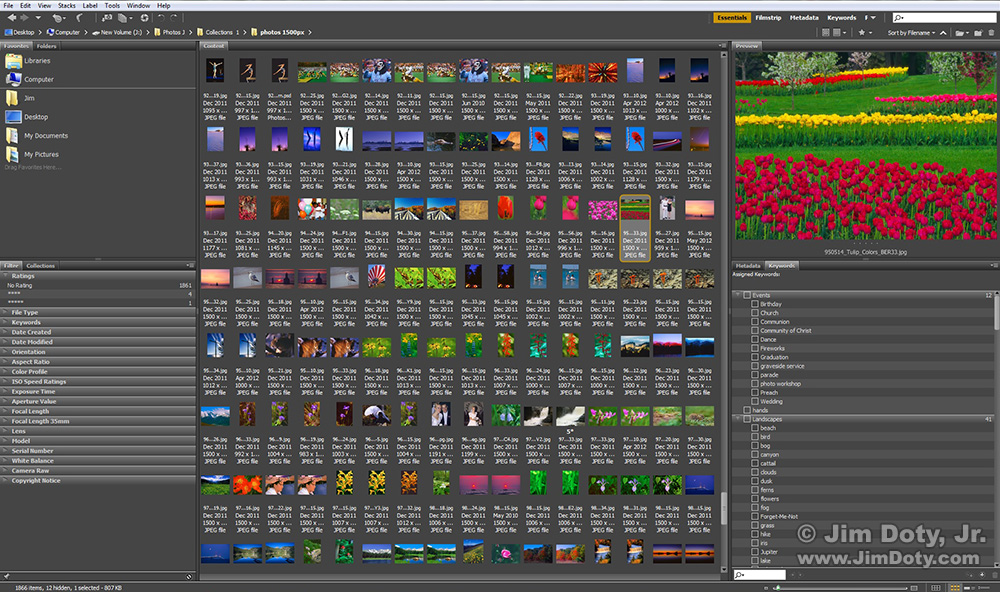
Folder opened with Adobe Bridge. You are looking at 128 images out of over 1800 images in the folder. Click to see a larger version.
I was asked recently if I have a favorite focal length, lens, or aperture setting. And I have also been asked if I have favorite shutter speeds and ISO Settings (see Preferences Part Two). So I decided to open a folder with over 1800 of my images (a little of everything) and take a statistical look at what I do.
(This article was originally written Nov. 11, 2015 and revised Nov. 13, 2015.)
Using the Histogram to Check Studio Flash Exposures
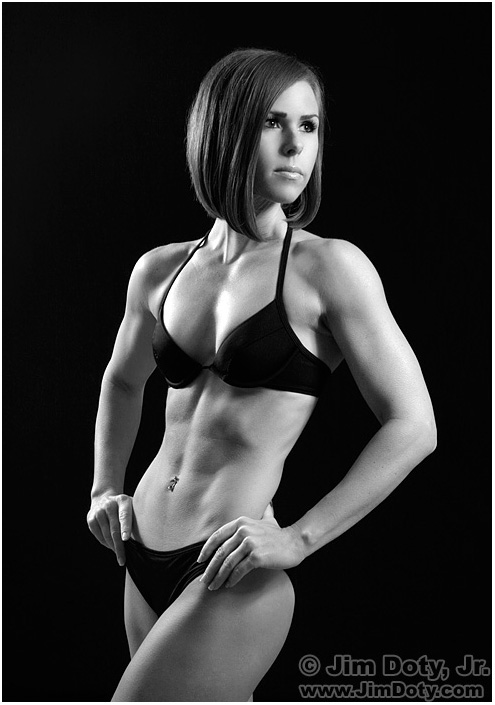
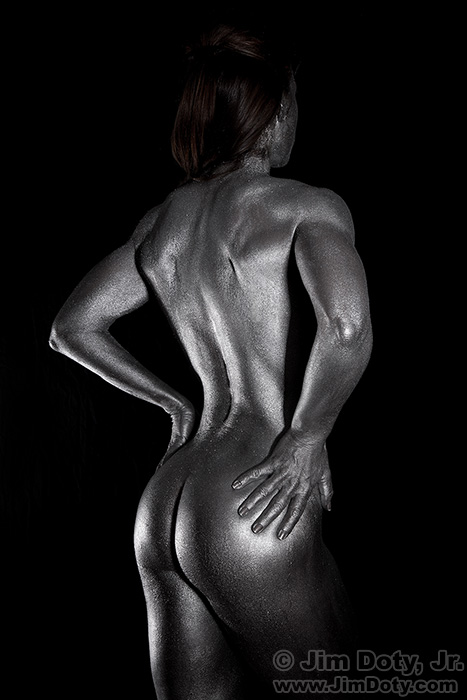
Photo Shoot: Sarah in Silver Metallic Body Paint
Sarah is a professional fitness trainer (and one of my favorite clients) and we get together once or twice a year to create images. Several months ago we planned our next photo shoot and picked a date this fall.
Woohoo!!!
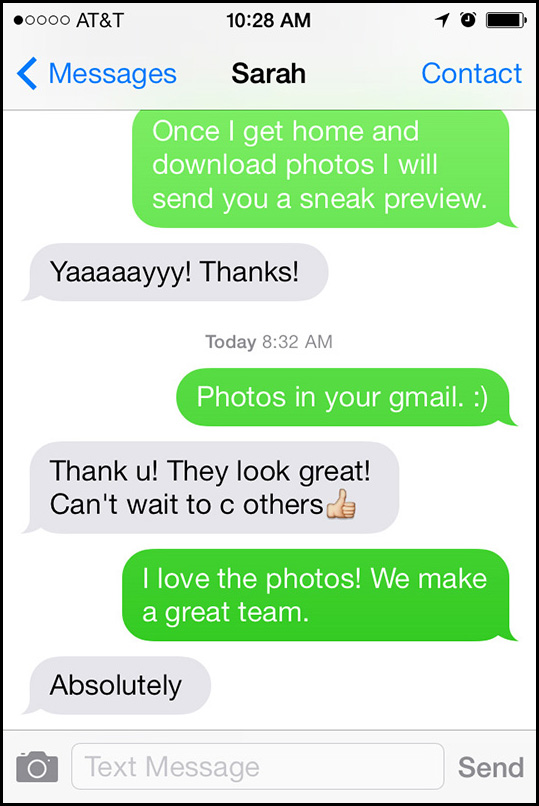
I have been sending more photos to Sarah this morning (see my last post). I will post a few images from our photo shoot later today.
A Happy Photo Client Makes My Day!
Like most photographers, I want my clients to be pleased with my work, and when a client loves the images, well . . . .
6 Photographers, 1 Subject, 6 Different Stories, 6 Very Different Portraits
Fisherman? Alcoholic? Millionaire? Former prison inmate? Saved another person’s life? Psychic?
Six photographers were told 6 different stories about the same person, and came up with 6 very different images. Are we, as portrait photographers, shaped by the stories we attach to our subjects?