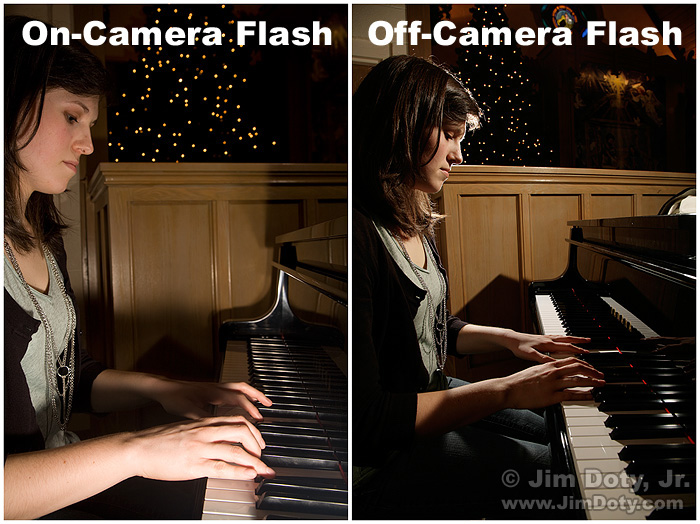
When shooting portraits, turning the face upside down to change the usual perspective can give the face a dramatic new look. We are used to seeing people right side up with the eyes higher in the photo than the nose, lips and chin. Putting the eyes at the bottom of the photo changes the look of the face. Most people are surprised at the difference in how they look when photographed from this angle.
Category Archives: Photographs
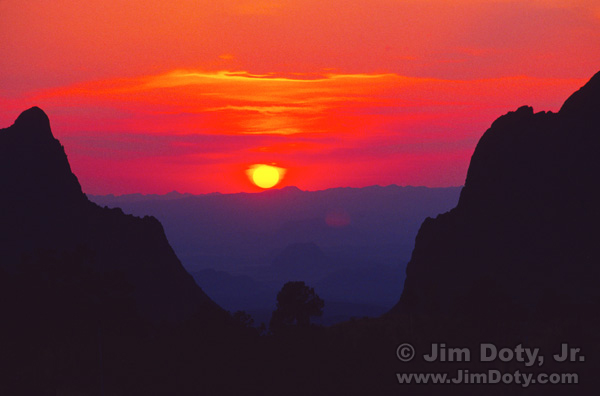
Header Photo: Last Light on the Spanish Peaks
The photo in the header of this blog (as of Dec 24) is the Spanish Peaks above the little town of LaVeta Colorado. As a small boy growing up in Colorado, a view of the Spanish Peaks greeted me every morning from our living room window.
POTD: Sky Dog!
POTD: Christmas Angel
In this “found photo”, I wanted to capture the light shining on the angel, but also the light shining through the angel’s somewhat translucent right wing. The challenge was to find an exposure that wouldn’t totally burn out the left side while catching the light coming through the wing.
POTD: Window Light Portrait, Part 2
There is a reason photographers like soft window light. It is great for all kinds of subjects, like the young woman above and the photo of a 2 week old infant in a prior post.
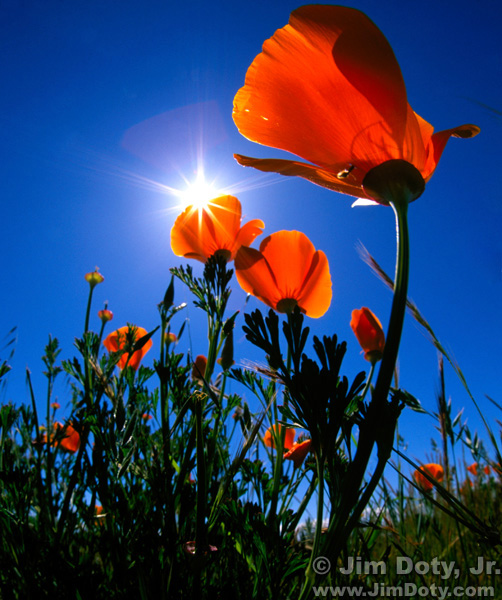
POTD: Poppies and Sunstar
Flowers photos are often taken from eye level (human eye level), but flowers usually look best when taken from the flower’s eye level. But some flowers, under the right conditions, look best when the camera is right on the ground and looking up.
POTD: Infant in Soft Window Light
Photographers take advantage of window light to create portraits, and long before photography, painters were making good use of window light. It can be beautiful light.
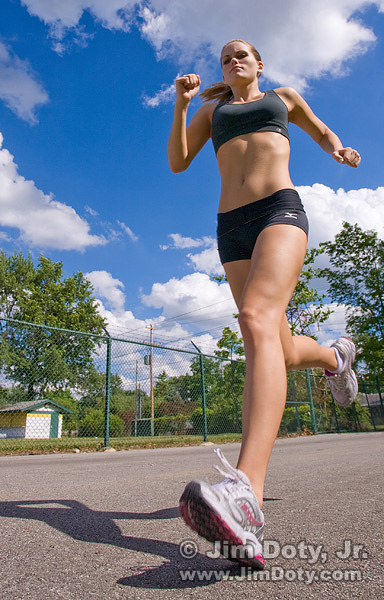
Put Your Camera On The Ground
Most photos are taken from eye level, so you can give your photos a dramatically different look by putting your camera on the ground.
POTD: Studio Portrait
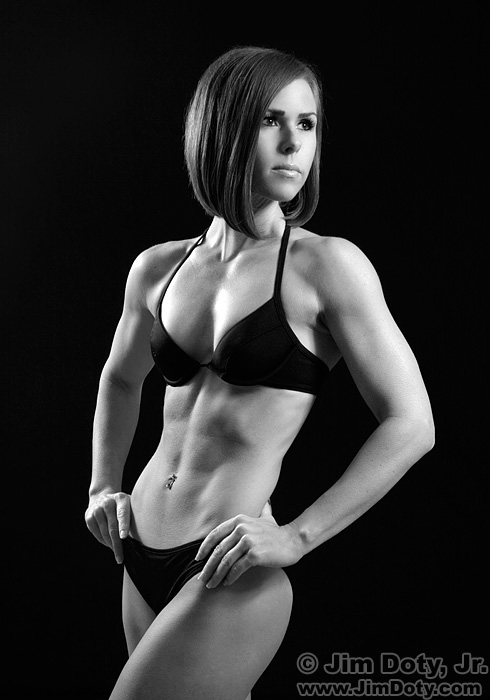
It doesn’t take a lot of lights to create a portrait. The portrait above was created with two studio lights. This is how the photo was created.
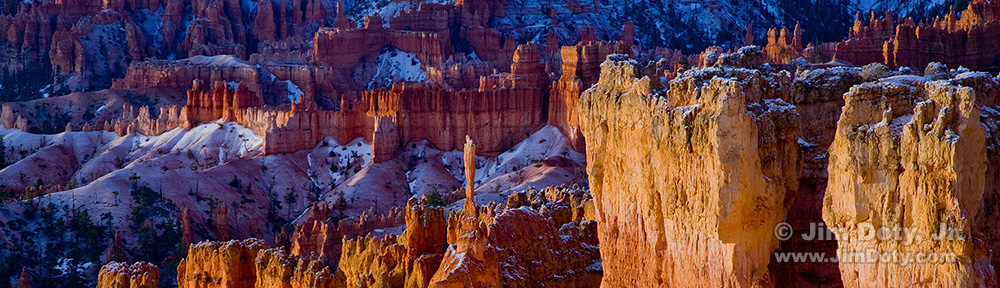
Photo of the Day: Bryce Canyon at Sunrise
Bryce Canyon in southern Utah is one of the most spectacular places on the planet and I finally found a chance to stop there on a trip to California. It was late April and I was hoping for snow. I arrived about sunset (with no snow on the ground) and I had to leave the next morning after only a few hours of shooting time. Mother Nature must have smiled. There was a dusting of snow overnight.
Environmental Portraits and Off-Camera Flash, Part 3
Off-camera flash can provide more pleasing light and a much more dramatic photograph than on-camera flash. Using two off-camera flash units provides even more dramatic lighting possibilities.
Portraits: Open Shade on a Sunny Day
People generally look best when you photograph them in soft light. That’s why studios bounce the studios lights off of big umbrellas or through big “soft boxes” to widen and soften the light. The umbrella or soft box mimics the nice soft light you get on a “cloudy bright” day when there are just enough clouds to soften the light and minimize shadows.
Environmental Portraits and Off-Camera Flash, Part 2
Off-camera flash is so useful because it gives you a different look from the millions of photos that are taken with the flash on the camera. The light can come from any direction you choose, no matter where your camera is, and the latest technology makes automatic flash exposure quick and reliable.
Environmental Portraits and Off-Camera Flash, Part 1
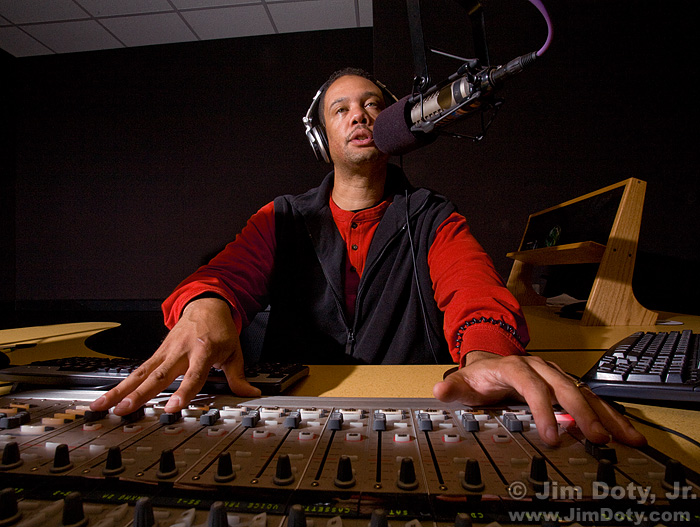
If I am using flash for an environmental portrait, I usually prefer having the flash off of the camera. In this portrait of Warren Stevens (program director and mid-day air personality at Magic 106.3 FM in Columbus), the flash is above Warren and to his right, providing a nice semi side-lit photograph. On camera flash is flat and even. Getting the flash off of the camera and moving it to the side provides more shape and texture to the subject.
Photo of the Day: Sarah
I’ve photographed people in a lot of different occupations, but this is the first time I’ve worked with a professional fitness trainer. Sarah Gearino (“Body Evolution by Sarah”) is taking on more clients and she wanted photos for her Web site (which is currently in the planning stages).
Finding the Peak of Fall Color
Fall color is sweeping the country. To make the most of it, you want to be at the right place at the right time. Fortunately, that’s not hard to do.
Remember 9/11
Matt Dirty! Matt Clean!
“Matt Dirty”, “Matt Clean” was Matt’s idea. He is the owner of One Call Auto Mechanic, and he asked me to do a set of “environmental portraits” of him at work (Matt Dirty), plus another set of portraits for his family (Matt Clean). In this post, I show you some of both, along with some photo tips and a few safety suggestions for this kind of shoot.
Photo of the Day: Tahitian Wave
We were on the western shore of Tahiti Nui watching the the waves break on a reef, quite a ways from the beach. A strong wind was blowing from the beach out toward the waves, blowing a fine mist of water off the tops of the waves and out toward the Pacific. The waves themselves were a beautiful shade of blue and a nice contrast to the darker blue of the surrounding water. It was the blue of the waves and the fine mist blowing off the crest of the waves that attracted me to this scene.
Happy 4th of July
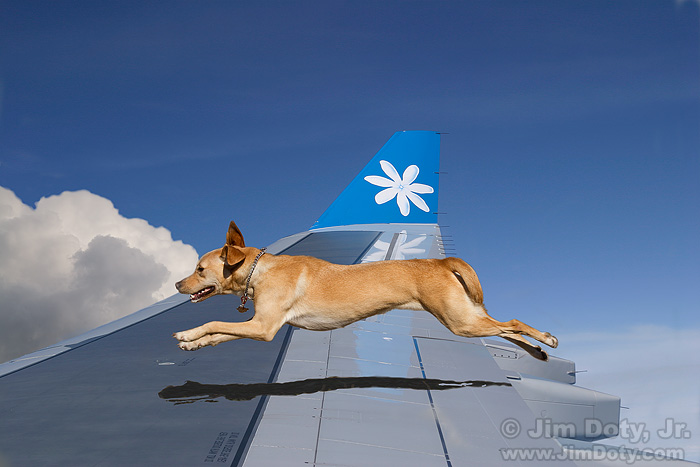
Dog in Flight: Capturing Action
Capturing action is a matter of choosing the right shutter speed. You have a lot of options from a sharp subject against a blurred background to a sharp background with a blurred subject, or both blurred, or a sharp subject and a sharp background.
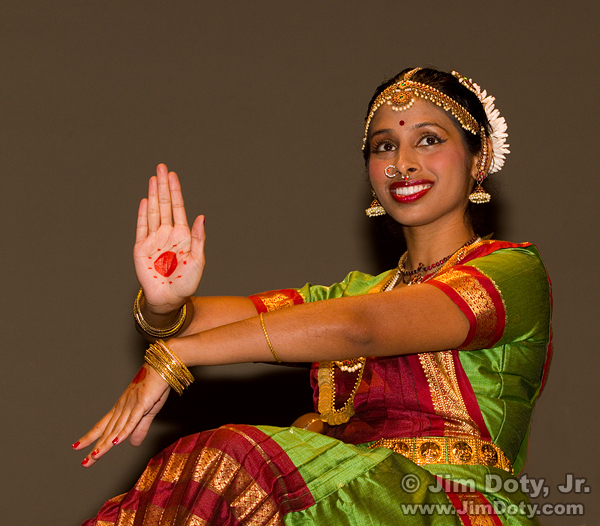
Sai Charita: Dance Drama
Shooting “events” is both challenging and rewarding. The photographer has very little control over the lighting and the position of the subjects (unlike most other kinds of photography), so you make the most of what happens and improvise. Shooting events will do wonders for your photographic skills, not to mention the eye-catching photos that can be captured.
Take the Photo Anyway!
You have your photo all planned out long before you click the shutter, but the moment arrives and things don’t work out like you had envisioned them. What do you do? Maybe you should take the photo anyway.
Getting Maximum Sharpness
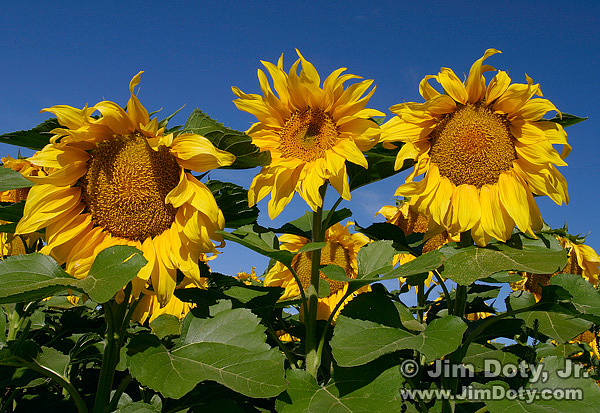
A lot of images fail because they just don’t look sharp. Of course there are times when you want a blurred photo, but most of the time photographers want part of their image (if not most of the image) to look sharp and crisp. The seeds in this sunflower photo are a good example of an image that asks to be sharp.
Can I Make Quality 8×10 Prints from my Digital Camera?
How big a print can you make from your digital camera and still have good image quality? That’s a common question. I received an e-mail today about camera file size and quality 8×10 inch prints. The question and my answer follow.
Photography in Big Bend
I prefer cool breezes, mountains, pine-scented air, and cold mountain lakes or streams, so I was totally surprised when I fell in love with Big Bend National Park. Located in the hot, Chihuahuan Desert in southwest Texas, it is the opposite of where I prefer to be, both personally, and photographically – or so I thought. But my first trip to Big Bend changed all of that.
Incident Light Metering on the Cheap
A simple $12 accessory will do most of the work of a $300 incident light meter. Hard to believe? Keep reading.
MY NEW PHOTOGRAPHY BOOK
UPDATE, NOVEMBER 4: My book is now in stock at Amazon.com. Just in time for holiday gift giving. Use the link below to order. It is available in both paperback and Kindle editions.
My new “how-to” photography book, Digital Photography Exposure for Dummies, will be out in a couple of months. It is part of the new, full-color, Photography for Dummies series, so it is loaded with full color photographs.
Is this book for you? That’s what this post is all about. After reading what follows, you should have a good idea if this book will be helpful to you and your photography. Keep in mind that this book would be an excellent gift for the avid photographer in your life.
In a few words, this book is about taking your photography to the next level. Even if you are a beginner, this book will show you how to take control of both the technical and artistic sides of exposure, setting you free to create eye-catching images. If you are well past the beginner stage, this book will take you through some advanced exposure concepts and techniques that most books don’t cover.
iPHONE 3G PHOTOS
Can you take nice photos with an iPhone? Yes. Does it have its limits? Of course.
I have been experimenting with the photo capabilities of an iPhone 3G. The files are small, 600×800 pixels, but the image quality can be quite good under certain circumstances. This is a switch for me since I usually take photos with a full frame digital SLR. But I have been having fun with the iPhone and learning what it can and can’t do.
PHOTO OF THE DAY: ASPEN GROVE

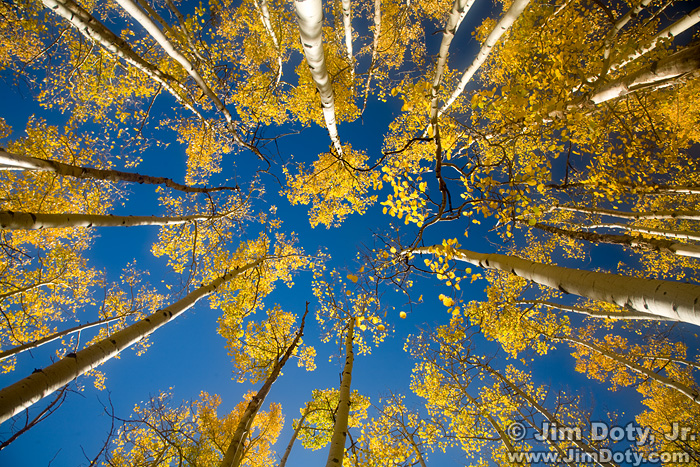
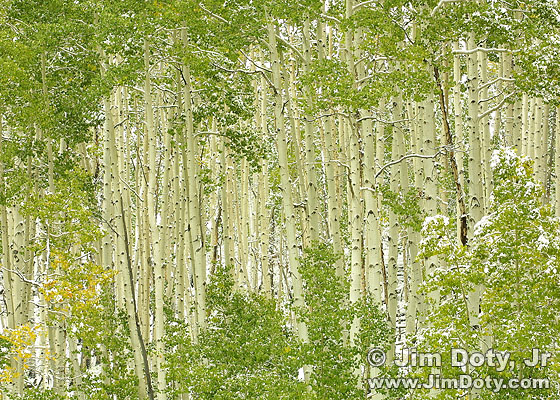
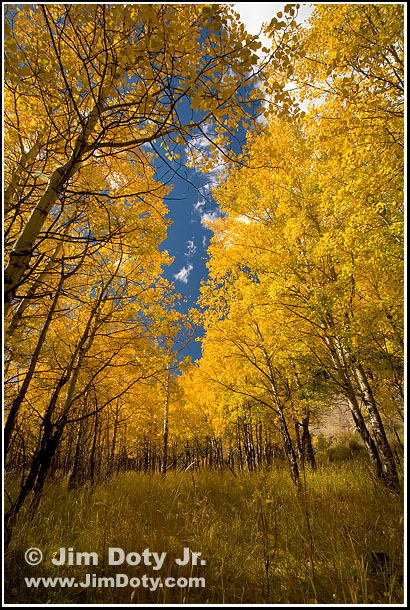
Aspen Grove, Moraine Park, Rocky Mountain National Park. Photo © Jim Doty Jr.
To create this look in the middle of an aspen grove, I used a wide angle lens (at 17mm) and put the camera low to the ground and pointed the lens up. I used a vertical composition to add height and sweep to the image. The blue sky was saturated with a polarizing filter.
Data: Canon 5D, EF 17-40mm lens at 17mm. Shutter: 1/40 second. Aperture: f/11. ISO 100.